

Dolphin Music News Feed
December 17, 2008Yamaha Tenori-On Orange: More Affordable Model, Coming Soon!
November 5, 2009The new – and cheaper! – version of the popular Tenori-On is arriving soon at Dolphin Music. This instrument has captured the imagination of musicians and producers all over the world, including artists such as chart-topping Little Boots. Find out more about the new model…

Yamaha Tenori-On Orange – new, and more affordable model! 

The new Yamaha Tenori-On ‘Orange’ offers the same levels of creative power as the original Tenori-On, but has been made significantly more affordable!
For example, Yamaha have replaced the very cool but expensive magnesium casing of the original with a heavy duty and durable plastic casing .

The original Tenori-On became an instant hit worldwide, and has been used by several influential artists such as Massive Attack, Bjork and chart-topping Little Boots. Now, this newer, more affordable version is set to make this incredible and innovative instrument even more popular!
All the same features and spec as the original apart from:
- No Magnesium alloy body – white plastic frame on this model
- Has orange LEDs instead of white LEDs
- No screen on the back of it – has the interface
- Does not run on batteries – mains only
The Yamaha Tenori-On Orange will be arriving soon at Dolphin…just in time for Christmas! But stock is limited…so pre-order yours now! Visit the Yamaha Tenori-On Orange product page for more info.
A Buyers Guide to Acoustic Treatment
October 28, 2009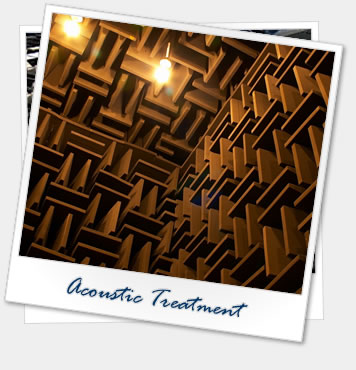
A Basic Guide to Acoustic Treatment
Here is an excellent excerpt from Audiotuts which gives you are more than easy to understand introduction to sound treatment
Of course this is an extremely technical subject and this tutorial in no way claims to be the definitive guide to acoustic treatment, but these tips and guidelines should get beginners up and running and generally help to clarify the whole subject of room acoustics.
I’ll run through the basics of choosing the right space, positioning your kit and then look at different types of treatment techniques and materials.
Step 1 – Your Room
Unfortunately most of us don’t have the luxury of designing our own studios from scratch and in some cases permanent customization is even a problem, so often the rooms we work in have pretty obvious faults and more often than not there is work to be done. If you can afford it, you can have the room analyzed, or you can even attempt this yourself but assuming this is too expensive or technical for most, we’ll look at a more basic route.
Every room is unique and everything in the space will effect its sound. Wall angles, flooring, windows, doors and of course its overall shape will all dramatically change the way sound is perceived within the room. The first thing to do in any situation is to identify the problem areas in your room and home in on the issues that need to be addressed. It’s possible that some things can be rectified before any acoustic treatment is even purchased.
If you are restricted to using one particular room, you are pretty much stuck with its basic shape and size but look out for things such as highly reflective surfaces. These will create large amounts of reflection and play havoc with your stereo image and you are also likely to hear your audio several times as it bounces back to you. These issues can make mixing an absolute nightmare.
So if you have any large windows try using some curtains to cover them up. Even blinds would be a better option than large exposed areas of glass. Mirrors and exposed polished work surfaces should also be avoided if possible. This rule of thumb generally extends to floors as well, so try to opt for a hard wearing carpet rather than a laminate or hard wood floor.
If you are fortunate enough to have a choice of rooms (or you are able to modify the one you are in) it’s a good idea not to go for anything too large or too small. I realize these are very general terms but common sense should prevail here. Extremely large rooms often have many inherent problems, such as standing waves, nodes and large amounts of reflection. These problems often require a lot of treatment to rectify. The sheers size of the walls in larger rooms will mean that more acoustic treatment is required.

Large rooms can require a lot of treatment
Very small rooms will arguably present fewer problems from the offset but there will be obstacles none the less. Lower frequencies will often not have space to develop in these more confined spaces and this can lead to mixes that don’t translate well to larger systems. Unfortunately a lot of the problems caused by monitoring in smaller rooms cannot be solved using acoustic treatment, so the only remedy here might be to relocate!

A well designed small room set up
As far as shape goes, there are a huge number of variables here but as a rule symmetrical opposing surfaces are not ideal and rooms with differing angled walls will be much easier to treat.

Custom room design is ideal but expensive
Step 2 – The Listening Position
Just as important as the room you are in, is the listening position you choose. Smaller rooms may limit your choices here but if you have enough space, you can afford to take a more considered approach and really think about where you place your equipment.
First up the sound coming from your monitors needs space to develop, especially the lower frequencies. Try not to position your workstation in an alcove or too close to any walls. The same goes for your listening position, this should be a good distance away from any walls as well. Some speakers for example will be rear ported and these need to be placed at least ten inches or so away from any hard surface in order for the bass be reproduced correctly. The same goes for any sub woofers that are rear or side ported.
If your room is oblong in shape or has one aspect that is longer than another, it is wise to position your self so that you are in line with the longer part of the space. Again this gives the all important low frequencies a chance to develop and any reflections from the back wall will be more easily managed by using broadband absorption.

Correct position in an oblong space
Another important thing to think about here is something known as the ’sweet spot’. This is really just the ideal position between your speakers. With your speakers positioned correctly you should be able to draw a triangle between your ears and each speaker. The speakers should be positioned so they face down the lines of this triangle and if they are above you in height they should also be tilted downwards.

A simple representation of the ’sweet spot’
If you are positioned correctly in your room and you are in the sweet spot you should get a good stereo image and be able to hear all the frequencies your system is producing. You should now be ready to identify and tackle any acoustic problems the room may be throwing at you.
Step 3 – Absorption
Before I go into how and where to fit your acoustic treatment, let’s look at the different kinds of treatment that can be used and what each one is capable of. If you can get your head around these basics then it should be relatively easy to decide what you need when you experience a certain problem.
The first kind of treatment we’ll look at is absorption. This is possibly the most commonly used acoustic treatment in home studios, in fact it is possible that it is over used. In some studios this will be the only sort of treatment you’ll see and often far too much of it. This can have a really negative effect on your final mixes, so let’s look at the how it works and when to use it.
Absorption is needed where there is a lot of reflection taking place. This will present itself as an echo or ring in your room and will usually effect the mid and high frequencies. These echoes are called early reflections and if untreated can be very fatiguing to the listener over time. It’s also hard to get an accurate high end mix when these are present.

Representation of early reflections

Early reflections being treated by absorption
Absorption treatment most commonly comes in the form of tiles, and these can be of various densities and textures. These tiles will actually absorb a proportion of the sound that hits them. This means less reflection and less of the signal coming back to the listener.
If you are pretty new to the area of acoustics, it might be best to acquire some broadband absorption tiles. These tend to be of a higher density and will work well across the largest frequency range possible.

The trick is here to do things a little at a time. As a general guideline you are looking for about 70% coverage using some kind of acoustic treatment. Don’t go crazy here and slap tiles on every surface, you will end up with a totally dead unrealistic space. You are really just trying to eliminate the ring for now and once you reach this point you will have certainly made enough impact to start looking at other areas.
Step 4 – Diffusion
Some reflection of the sound in our workspace is actually a good thing, believe it or not. Hearing some of the mix come back to our ears from various parts of the room can help create a realistic stereo image and a more open natural sound.
The problem is that if you simply leave areas of wall bare to create this reflection you will get a horrible slap back style delay and this is far from desirable. Other hard flat surfaces such as your computer screens and work surface can also create this sort of unwanted reflection.
The answer to this problem is diffusion. This is similar to reflection but instead of all the sound being reflected in one go it is diffused and returned to your ears at many different intervals.
When you see a diffuser you will immediately see how they do this. An average diffuser panel is made up of numerous small segments. These may appear random but are designed using exact mathematics. The Skyline range of diffusers for example uses a primitive root formula, meaning each section is an exact prime number.

Skyline diffuser

Diffusers fitted above listening position
This sort of treatment works really well in smaller rooms and can greatly enhance the stereo image and overall sound of a room when applied correctly.
Step 5 – Bass Traps
Fine tuning your space to reproduce low frequencies correctly is an art of its own and can prove to be a challenge. The first step here is to use traditional bass traps to treat all the corners of your room. This will help to prevent the powerful omni-directional low frequency energy from grouping and creating bass heavy spots. If you need to you can also treat the join between the ceiling and walls.

Traditional bass traps
If after this initial treatment you are still experiencing bass heavy areas in your room, it is likely that you have nodes or standing waves occurring. These can be reduced using heavier wall mounted traps. These are similar to broadband absorption panels but are usually made up of several layers and of much denser material. These are pretty expensive to buy but if you are confident enough DIY versions can be effective.

DIY traps
Step 6 – Decoupling and Isolation
When treating your room it is worth looking into isolating your speakers and subs. By using dense platforms under your speakers you can ‘decouple’ them from your work station, desk or floor. This will do a few things, firstly it will prevent anything the speakers are resting on from resonating. This means you will be listening to your mix and not the furniture in your studio. Secondly decoupling will reduce the amount of low frequency transmitted into the walls, floor and ceiling of your studio, cutting down on the sound traveling into adjoining rooms.

Speaker isolator
Subs can be isolated using dense pads especially built for the job and you can also decouple kit that is effected by vibration. For example turntables can be isolated to prevent errors in playback in loud environments.

Sub woofer isolator
Step 7 – Placement and Fitting
When you have got your head around the different flavors of acoustic treatment available to you and you have identified the issues in your particular room, you are about ready to start installing the stuff.
When it comes to actually sticking the panels, traps and diffusers up you have a few choices. For a permanent solution go for glue. For a more semi permanent, re-fixable option try spray adhesive and if you need something that leaves absolutely no marks at all you can get velcro pads or pins to hold the treatment in place. A hint: companies such as Auralex do supply excellent products but a quick scout around your local hardware store may reveal the same thing for a tenth of the price!

Fixing glue

Spray glue

Fixing velcro
If you are not well versed in the science of acoustics and you are unsure about the placement of various treatments, a good analogy to use is that of pool balls being fired from your studio monitors. If the balls hit a hard surface imagine they continue on their path, they then hit subsequent surfaces and continue further.
With this in mind it is likely that the path of the virtual balls will eventually reach your listening position and this is what you are aiming to stop. Try to treat the spots along this route you have traced with broadband absorption panels and listen to the difference this makes. This method should highlight how important it is to treat the rear and front walls and the surfaces directly above and to the sides of the listening position.
This is a very basic guideline on placing your treatment and shouldn’t be taken as gospel. If you are serious about doing this to the letter then you should really take the time to do some further research into audio acoustics.
Diffusion panels can be placed above any hard surfaces such as a workstation or computer monitors, and absorption panels can be alternated with diffusers for a more open sound in the room. This can be adjusted to taste as you go.
Treating the room for bass frequencies should be a separate process really and this is one area you can afford to be pretty heavy handed in. It’s pretty difficult to go over the top here but treating all corners is a pretty safe bet.

Bass traps being fitted

Bass traps being fitted
DIY acoustic treatment is all about applying common sense and caution. Apply a good mix of treatment types, add more treatment a bit at a time and take time for critical listening sessions throughout the process. If you follow these guidelines you should end up with a superior listening environment and mixes that transfer to the real world satisfactorily.

Treated room example 1

Treated room example 2 by Mo Volans

Author: Mo Volans
Mo Volans has been releasing tracks for well over a decade with many of the world’s top electronic labels. Having worked with a long list of high profile artists, he has enjoyed top ten success on numerous of occasions. Mo records under the names MoHawk, Twisted Air, and Openair and also writes music for TV and film. Mo is also a prolific writer and journalist writing for publications such as Music Tech, Remix mag and EQ.
Soundcard Buying Guide
October 21, 2009
We understand that the Soundcard market can be a little daunting if you don’t know exactly what you are looking for. With various connection methods such as USB, Firewire, and PCI it is difficult to find the one for you.
This guide should give you an overview of the world of soundcards and hopefully help you someway in choosing the right one for you. Please remember that you can always call us if you ever need help or advice on 0844 815 0888.
The difference you find with soundcards to mixers is that where as a mixer will just take an analogue signal and keep it as analogue. A soundcard converts the analogue to digital. The price of soundcards can sometimes be determined by the quality of the AD converters and mic pre amps. For example the quality of the RME AD converters is better then the ones found on the M Audio soundcard range, although how much better is negotiable.

Tascam US122 M
Will the soundcard on my computer not suffice?
Whenever a customer questions this at Dolphin our response is always to let them try it out first with the onboard soundcard. There is no better way of learning how much of a difference good AD converters can be then to use really bad ones. The onboard soundcard (or internal soundcard) is installed for alert sounds, games and MP3s but when it comes to recording audio and transferring to digital you really do need a better soundcard. Interference from the transformer, hard drive and so on will always inhibit the quality
On board soundcards don’t offer multiple inputs which rules out any larger scale recording of bands or primarily drums. They also suffer from large amounts of latency (glitches in the audio recording) which you will need to overcome via getting a better soundcard. This latency is caused by the onboard drivers not being capable of fast transfer speeds. You really need something with ASIO 2 drivers, which most external soundcards support

Focusrite Saffire Pro 24
How Many Inputs and Outputs do I need?
In today’s market there is a soundcard for everybody. We always ask customers to think into the future. Will there ever be a time that you will want to record more than two inputs simultaneously. This might be drums, a live recording, a band or the fact that they will have many instruments and don’t want to keep plugging and unplugging cables. If the answer is yes then we recommend 8 inputs. Unless you have a specific reason we would recommend that you have all 8 inputs via XLR and mic pre amps. You may not want this if you are using your own Pre Amps or you specifically need jacks.

M-Audio ProFire 2626 High-Definition FireWire Audio Interface
If your music work will mainly be you and overdubbing other parts later, you can work happily with one or two inputs which is how a large amount of souncards are designed. Many people realise that they only need two inputs and if that is the case there are many options for you. Solutions range from just a small box that you connect to your computer, MIDI keyboards with soundcards built in (for the musician on the move) to guitar FX modeling solutions that you can connect straight to your computer. More and more manufacturers are seeing the need for combining an audio recording solution with their products.

Do I need a special Soundcard to use Pro Tools?
In a nutshell “Yes”. DigiDesign software will only work with Digi Design hardware. They obviously do very expensive HD systems for the medium to large studios, but they also have a more budget range of audio recording solutions. They have the Digi 002 and rack version for someone who wants 8 simultaneous inputs into ProTools. Anyone just wanting 2 inputs they have the ever popular MBOX and new MBOX Pro.

Digi Design has recently bought M Audio, a smaller company that specialises in soundcards. Since doing this they have allowed users to run Pro Tools on M Audio soundcards. To do this you must purchase software called M Powered and have a soundcard that is compatible and you have a Pro Tools system.

Soundcard Connectivity with Computers
The ever popular question about what connection you should go for is asked by customers every day at Dolphin Music. Firewire is probably the most popular type as of today due to its fast data transfer speed, you will find that M Audio firewire interfaces as well as Presonus are very good. USB 2.0 which is actually slightly faster is also popular with the Mbox 2 Micro , Steinberg CI2 and Apogee ONE using it.
Back in the last century when we started all this USB and Firewire were but a twinkle in some technician’s eye. It was all about PCI cards which are going as string today as they have done. PCI (or PCIX – new versions) can offer faster data transfer but are also more processor dependent. Famous PCI soundcards are the likes of the M Audio Delta range and the older MOTU range of soundcards.

It would be rude to talk about connectivity and not mention PCMCIA. This is a method of connecting directly to laptops. Just think PCI for laptops. Due to USB and Firewire it is becoming less popular but some still believe it to be the only true way of getting true recordings onto laptops. This is debatable and we just don’t have the time!
Free Software
All soundcards will come with software that will allow you to control the routing of audio within your soundcard. You will need this software to interface with your recording software. It basically allows you to interface with your soundcard as if it were a mixing console.

NEW! Tascam DP-008 portable 8-track recorder
October 19, 2009TASCAM culminates 30 years of Portastudio Recording with the DP-008, a portable 8-track recorder for all musicians

TASCAM’s DP-008 is an eight-track multitrack recorder that captures CD-quality audio, two tracks at a time. You can use built-in microphones to grab ideas, plug condenser mics into the XLR inputs or plug a guitar directly in to lay tracks.
There’s even a metronome and chromatic tuner built-in for tight-sounding tracks. The Tascam DP-008 also allows you to digitally bounce tracks to make room for more, and touches like editing and undo make recording stress-free.
Each track on the DP-008 has its own row of knobs for level, pan and effects, just like our classic cassette Portastudios of the past. The effects knob sends to a built-in stereo reverb processor with hall, room, stage and other effects. Each track also has EQ to tailor the sound for your mix. When your song is complete, mix it to a dedicated stereo track while riding levels and flipping pan as much as you want. You can export your mix, or even individual tracks, as a WAV or MP3 file.
TASCAM invented the home recording studio with the original cassette Portastudio. The DP-008 takes the ease-of-use of those classic songwriting tools and adds portability, digital sound quality, effects and mixdown to bring home recording into the 21st century. Simplify your recording workflow with TASCAM DP-008.
For specifications, please visit the Tascam DP-008 product page
Midi Keyboards: Why? How?… & 5 of the Best!
June 25, 2009
The Edirol PCR-M1, the world slimmest MIDI Keyboard…view more |
A MIDI keyboard is a piano-style digital keyboard device used for sending MIDI signals or commands to other devices connected to the same interface as the keyboard.
MIDI is an acronym for Musical Instrument Digital Interface (protocol). The basic MIDI keyboard does not produce sound. Instead, MIDI information is sent to an electronic module capable of reproducing an array of digital sounds or samples that resemble traditional analog musical instruments. These samples are also referred to as voices.
An encoding scheme is used to map a MIDI value to a specific instrument sample. Also, other sound parameters such as note volume and attack are included in the MIDI scheme. The keyboard merely acts as a MIDI controller of sound modules and other MIDI devices, including DAW software.
MIDI keyboards are a very common feature of a recording studio, and any DAW setup. Most include a transpose function and the ability to set different octaves. Many MIDI keyboards have pitch bend and modulation wheels. Some also have extra sets of assignable rotary knobs and/or buttons for sending custom MIDI messages to the synthesiser, sampler or DAW software.
Other features that some MIDI keyboards might include are:
- Input for foot switch (usually used as a sustain pedal)
- Input for a foot expression controller
- Semi-weighted or fully weighted keys
- Capability of sending aftertouch
- Direct USB connection for use with computers
In other words if your serious about making music on a computer a MIDI device will make your work better faster!
How do I connect a MIDI keyboard to my computer?
The first thing to do is to make sure that your MIDI keyboard has MIDI ports on the back. It is very rare to find a modern midi keyboard without MIDI ports.

Here are your options:
- USB to USB
- MIDI to MIDI
- MIDI to USB port
- MIDI to soundcard gameport
USB to USB
Every modern MIDI controller keyboard we sell excluding those by Fatar now come with a USB connection for easy use with computers. Some keyboard are even ‘class complient’ which means you don’t even need to install any software. The cable you need for a USB to USB connection is just a standard USB cable which should be included with your keyboard. For USB Cables in stock at Dolphin, CLICK HERE
MIDI to MIDI
Some of the audio interfaces we sell such as the M-Audio Audiophile 2496 or the Tascam US-122 combine Audio & MIDI I/O enabling your to connect your keyboard directly to your sound card. For MIDI Cables in stock at Dolphin, CLICK HERE.
MIDI to USB port
If your sound card doesn’t have MIDI connections and your keyboard doesn’t have USB then the next best option is a USB to MIDI interface such as the M-Audio Uno or the Edirol UM 1X.
These devices come equipped with a USB connection for your computer, and a 1 In/ 1 Out 16 channel MIDI connection to your MIDI keyboard. However if you had more than one MIDI device to connect such as a second keyboard or a sound module then mutli port options are avalible such as the M-Audio Midisport 2×2.
MIDI to soundcard gameport
If you are using a standard computer sound card rather than a music sound card, then it may have a joystick port.

If you have a joystick port then all you need is a cable that has a 15 pin ‘D’ connector at one end and MIDI connectors on the other.
If you need any further help, please call us on 0844 815 0888 and speak to one of our experts. We’ll be glad to help and direct you to the best gear for your needs.
More about MIDI…
MIDI data is not the same as sound data. What is transmitted over the wire is information on how to play a song, not the physical sound data itself. MIDI can be thought of better as a player-piano roll than a compact disk: just as the piano-roll instructs the player-piano to create the sounds, MIDI data tells a MIDI device which notes to play, patches (instruments) to use, and other information to help the instrument recreate the song. When you listen to a MIDI file, you’re hearing an actual ‘performance’ by the instrument, not a ‘recording’ of a past performance.
MIDI was not designed to be used with personal computers, but since it is a digital interface, they actually work very well together. Combining at least one MIDI instrument with a personal computer and a MIDI interface (a device that allows the computer to “speak” MIDI) allows for many interesting applications.
The the easiest way to get this up and running is to us a USB to MIDI keyboard. This will take care of any MIDI channel assignments and route it effectively in your DAW with ease.The USB device drivers are also native with Windows and Mac, which it will just WORK
——————–
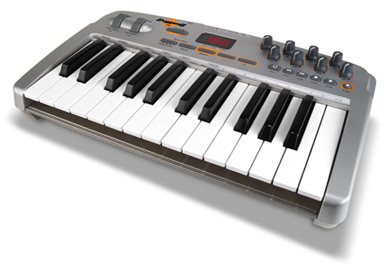
M-Audio Oxygen 8 v2 25-Key USB MIDI Controller
The Oxygen 8 v2 is an updated version of the mobile MIDI controller that started the mobile studio revolution. You get a fully functional MIDI keyboard with great action, plus eight MIDI-assignable knobs to control any MIDI parameters you desire in your hardware or software. It’s perfect for composing on the go or performing live bass lines and pads, firing samples, or triggering audio and/or visual effects. New features include full MIDI message support, plus 6 transport controls that can be reassigned to any MIDI parameter. The Oxygen 8 v2 also offers 10 non-volatile memory locations and is compatible with our free Enigma software for computer-based storage, retrieval and management of an unlimited number of patches.


——————–
E-MU Xboard 61 Pro USB/MIDI Controller Keyboard
The new E-MU Xboard™ 61 USB/MIDI Controller features 61 premium full-size keys with aftertouch, 16 programmable real-time control knobs, 16 new patch select/program change buttons, Xboard Control editing software, and a full version of E-MU’s Proteus X Version 1.5 Desktop Sound Module with over 3GB of sounds, including a new custom bank of E-MU’s finest performance keyboard sounds. The Xboard Control (Windows/Macintosh) software provides an intuitive desktop interface that lets you effortlessly create custom templates for all of your favorite hardware and software instruments. The Xboard 61 also gives you four Zones per patch (each with its own key and velocity ranges), allows you to set discrete MIDI channels for each knob and offers unrivalled real-time control and performance features, including Snap Shot that lets you send multiple program changes and controller values by pressing a single button, and Latch Mode that enables you to define a section of the keyboard as on/off triggers – perfect for drum loops. The Xboard 61 is perfect for studio and stage and can run on USB, battery, or AC power.

——————–
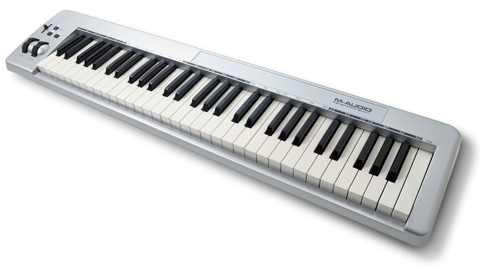
M-Audio Keystation 61es 61-Key Semi-Weighted USB MIDI Controller
The Keystation 61e is a 61-note USB keyboard with velocity-sensitive, semi-weighted keys that is designed to easily integrate in any computer music environment.
Class compliancy with Mac OS X and Windows XP delivers true plug-and-play setup. The Keystation 61e is also compatible with many music education and music creation software titles, making it ideal for classrooms and studios alike.
More advanced users can control software synths, external sound devices, and more with the assignable slider, and pitch and mod wheels. This sleek, compact keyboard is USB bus-powered and requires no external power supply.
——————–
M-Audio Axiom 25 Advanced 25-Key Semi-Weighted USB MIDI Controller
Don’t let the compact size of the Axiom 25 fool you. This advanced 25-key USB mobile MIDI controller features both semi-weighted action and assignable aftertouch, plus eight rubberized trigger pads that put drum programming and performance at your fingertips.
Eight endless rotary encoder knobs let you get your hands on synth parameters, virtual mixer controls and more.
Six transport controls can also assign to control other MIDI parameters. Virtually everything is freely MIDI-assignable—and the backlit LCD screen makes programming easy and intutive.
You get 20 memory locations for on-board storage, plus free Enigma editor/librarian software to manage an unlimited number of setups via computer.

——————–
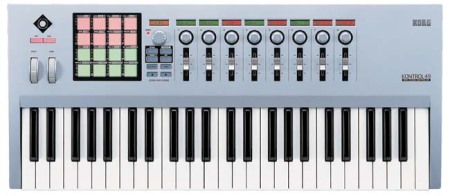
Korg Kontrol 49 USB Studio Controller
The new KONTROL49 combines intuitive design, great feel, familiar hardware and detailed displays into the most comprehensive controller for all your MIDI needs. Equipped with 40 assignable control elements – including the new Vector Joystick – the KONTROL49 provide new musical dexterity when working with soft-synths, MIDI modules, or any digital audio workstation.
Few controller keyboards can boast the high level of hardware integrity found in the KONTROL49. The 49 keys are not only full-sized; they feature the same great touch and feel proven in Korg’s professional workstation instruments. Eight velocity curves let you tailor the response to your own playing, or to a specific application. Octave shift buttons provide full access to the entire 128 note range.
AKG K 171 MK II – Comfortable, Dynamic Headphones!
June 19, 2009
K 171 MK II is a dynamic, on-ear, closed-back headphone designed for on stage monitoring and tracking as well as DJ mixing. The stage blue K 171 MK II comes with both leatherette and velvet earpads, as well as detachable 10-ft straight and 16-ft coiled output cables. Offering a frequency range of 18 Hz to 26 k Hz, a maximum input power of 200 mW and a rated impedance of 55 ohms, the K 171 MK II’s…
The AKG K 171 MK II combines the benefits of a closed-back design with the lightweight and comfort of supra-aural headphones.
The AKG K 171 MK II is designed for on stage monitoring and tracking as well as DJ mixing. It is an excellent choice for DJ and broadcast applications where no sound can bleed from the headphones into live microphones.
The closed-back, loud and rugged design gives the K 171 MK II a different low-frequency character and maintains its comfort and flexibility.
Key Features
- Professional hi-fi stereo studio headphones
- Self-adjusting headband for optimum fit
- Patented Varimotion speakers
- High ambient noise attenuation
- For broadcast and DJ use
- Rugged construction for tough handling
- Leatherette ear pads and additional velvet ear pads
- Single-sided, detachable 3 m cable and additional 5 m coiled cable
- Type: closed-back, dynamic headphones
- Sensitivity: 94 dB/mW, 107 dB/V
- Frequency range: 18 to 26,000 Hz
- Rated impedance: 55 ohms
- Max. input power: 200 mW
- Earpads: leatherette and velvet
- Cable: 3 m single-sided and 5 m coiled cable (99,9% oxygen-free); plug-in cable on headphones (mini-XLR connector)
- Connector: gold plated stereo mini jack
- Adapter: gold plated 1/8″ to 1/4″ screw-on adapter
- Net weight: (without cable) 200 g (7.1 oz.)
PRODIGY’S FRONT OF HOUSE ENGINEER JON BURTON TRIES OUT sE INSTRUMENT REFLEXION FILTERS, NOW THEY’VE BECOME AN ESSENTIAL PART OF THE BANDS TOURING PACKAGE.
June 19, 2009
When it comes to loud stages very few can compete with the sheer blistering volume of The Prodigy. With an on stage monitor system of epic proportions sound spillage is a major problem.
In an effort to help clean up the drum sound FOH engineer Jon Burton turned to SE for help. “As we were also recording the most recent shows, I wanted to get as clean a sound from the drum mics as possible” says Burton. As most of the mics are mounted internally it was the overheads that were presenting the greatest problem.

“Sonic kindly leant me some instrument reflectors as part of their loan scheme. We tried them in rehearsals and they seem to work so we bought four. When we did the first shows, some small warm up gigs in tiny clubs, they came into their own.

The spill was dramatically reduced and the sound more focused. They exceeded my expectations”. The reflectors have now been on tour for two months doing major festivals around the world, and have become an essential part of the bands touring package.
Jon Burton has also mixed for Beth Gibbons (Portishead) and Bjork at Live8 in Japan. Katrina & the Waves, Radiohead, Suede, Cocteau Twins and has also done monitors for Stereophonics, Lulu and Blue.

Sound On Sound said this……
“Those recording in less-than-ideal recording environments have been looking for a ‘magic bullet’ quick fix for recording vocals since the term ‘home recording’ came into being, and the SE Reflexion Filter represents a serious step in that direction. It can’t keep all reflected sound out of the mic, as some will end up bouncing into the mic’s frontal axis from the wall behind the singer, but it certainly reduces this by minimising the amount of voice making it out into the room and by attenuating off-axis sounds. This could be particularly useful in a typical studio vocal booth where there is often a glass door directly behind the microphone. If rear-wall reflections are still a problem for you, some thick blankets, duvets or similar behind the singer should bring about the desired degree of improvement, and in combination with the Reflexion Filter should allow anyone to record clean vocals that are free from damaging room coloration. The price of the Reflexion Filter could actually be said to represent extremely good value when you consider that it might well make more difference to the subjective quality of your recordings than blowing an extra grand or two on more sophisticated mics and preamps! “

SE Electronics Instrument Reflexion Filter
The SE Electronics IRF Instrument Reflexion Filter. Innovative and useful portable acoustic isolation screen for recording instruments. The SE Electronics IRF is a development from the hugely successful Reflexion Filter. Designed to give a degree of acoustic isolation and rejection of room ambience for drum mic separation, the Instrument RF can also be used for micing guitars, pianos, wind instruments……

SE Electronics The Reflexion Filter
The Reflexion Filter ‘portable vocal booth’ is a revolution in recording technology. The Reflexion Filter is a portable device for recording live sources with reduced room ambience. It is an advanced composite wall which is positioned behind any microphone by means of a variable position stand clamp assembly which ships with the product. The main function is to help obtain…
Rode Podcaser USB Microphone & Podcasting.. What is it?
June 19, 2009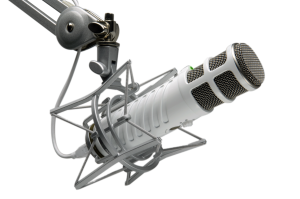
Broadcast Quality USB Microphone
Seamless integration was the idea, and it was obtained by creating a studio dynamic microphone with unparalleled A/D converters, so that the microphone can be plugged into any computer with no in/out boxes, no expensive computer pre-amps, just a USB cable.
The Podcaster offers an end-address configuration, the clarity of RØDE’s tailored-for-voice frequency response, an ‘ON’ L.E.D, a direct headphone amp, and of course very low self noise.
The Podcaster opens up possibilities for anyone who records audio – from podcasters, journalists and students to business people adding audio files to websites and multimedia presentations.
* Broadcast Sound Quality
* 28mm dynamic capsule
* 18-bit resolution, 8-48kHz sampling
* Windows and Mac compatible
* Powered by USB bus
* Internal capsule shock mounting
* 3.5mm stereo headphone output with volume control built-in to body
* Ideal for voice recognition software

Podcasting is creating your own content (mp3 or video for example ) with intent for users to download using one of several programs that have been created to retrieve your audio file automatically, like iTunes or Google reader etc.
Podcasting is simply distributing audio content using RSS. The process is suprisingly simple, and by making audio content available using RSS, podcasters give listeners more control over what they listen to and when. Also, many podcasts are available for syndication, which increases a broadcasters exposure.
For more infomation on RSS check our article here
Here is a breakdown of what you will need and need to know to be able to Podcast:
Skills you may need….
1. How to record your audio and save it to an .mp3 file. (Video is of course also allowed)
2. How to upload the .mp3 file to a website or hosting service
3. How to upload the RSS “feed” burner service.
After creating your material using an audio editing program of your choice you’ll need somwhere to store it online. if you have a sever upload it here, if your lost at the word ’server’ …get a blog like ‘WordPress’ or ‘Blogger’.
The majority of things you will have to master in order to Podcast are online and if your new to Blogging, Podcasting is an ideal reason to start. Your ‘Blog’ will allow to to upload you MP3’s and store them within your Blog enabling users to visit your site and download or even better ‘Subscribe’!
There are many different ways to create/ store your Podcasts, you just need to find the server and Feedburner that works for you, the videos here all do things a little different so dont worry if you do things different also!
An RSS feed is the final step in transforming your collection of audio/video files into a bona fide podcast! With FeedBurner’s SmartCast service, you can use any blogging tool that creates a feed to publish your podcast. Here’s how it works: If your blog post contains a link (<a href=””></a>) to an audio/video file, we’ll convert it to an RSS enclosure — a special link found only in your feed — that programs like iPodder, iTunes and NetNewsWire recognize. Google Reader and several other online readers also recognize enclosures and offer a playback link or audio control when they encounter them.
Equipment you may need…
1. Audio Editing Software
2. A Microphone
3. A Sound Card
Drum Circles = Drum Therapy:The Therapeutic Effects of Drumming
June 19, 2009
Drum therapy is an ancient approach that uses rhythm to promote healing and self-expression. From the shamans of Mongolia to the Minianka healers of West Africa, therapeutic rhythm techniques have been used for thousands of years to create and maintain physical, mental, and spiritual health.
Current research is now verifying the therapeutic effects of ancient rhythm techniques. Recent research reviews indicate that drumming accelerates physical healing, boosts the immune system and produces feelings of well-being, a release of emotional trauma, and reintegration of self.
Playing within the context of a drum circle is truly an example of the concept of teamwork at its highest level. As the rhythms come together and grow, we quickly realize the need for trust and dependence amongst our fellow drummers. So many of the lessons we learn in the drum circle can be directly applied in our homes, our schools, our workplaces, and our lives.
We learn to relax.
We learn to let go.
We learn to lead when necessary, and follow as needed.
We learn to focus intensely at times, and to just feel our way along at others.
And we learn how–without balance and harmony–the slightest hint of discord can send the whole thing spiraling out of control.
These are important lessons. The beauty is that, when learned in the proper environment, the actual learning process becomes invisible. The transition between these elements is seamless and transparent, and the concepts become as natural as breathing. Not the individual rhythms, of course–many of those take years to truly master–but rather our awareness of ourselves and our role in the bigger picture (in the circle and in life).
 |
 |
 |
Rhythm for a Healthy life : using rhythm for relaxation, meditation and healing
HumDrumStrum now offers workshops and courses aimed primarily at allowing you to use an African-style hand drum as an aid to relaxation and meditation. We cover basic hand drum techniques, understanding rhythm, playing multi-part rhythms in a group, improvisation, finding rhythms to play on your own and meditative drumming.
The workshops specifically provide you with the knowledge and confidence to play your drum both on your own for relaxation and meditation and with a group at a drum circle event (where the focus is on ‘music-in-the-moment’ rather than playing culturally specific rhythms).
We live in a vibrational universe where playing a drum can really help us to relax, de-stress and connect with ourselves and those around us.
Health benefits of drumming: the healing power of the drum
As well as the numerous benefits of drumming that are associated with empowerment, communication, confidence, community and team building, the drum has an amazing ability to facilitate healing and therefore there are also many health benefits associated with playing a drum and participating in a rhythm-based event.
Rhythm-based events:
- enhance psychological and spiritual well-being
- enhance physical well-being
- enhance social relationships
- enhance sensory awareness and physical dexterity
- improve self-esteem, self-confidence and personal development

Check out the following new article from the BBC:
Check out the following link from the BBC, where a new study suggests that drumming sessions at work can help reduce stress and lower staff turnover:
Drumming up a happier workplace
Other interesting articles (please click on the title):
Therapeutic effects of drumming
Sources:
http://news.bbc.co.uk/1/hi/business/3507109.stm,
http://www.humdrumstrum.co.uk
http://www.humdrumstrum.co.uk/health.html

Danny Elfman (The Simpsons theme) Discusses Scoring Terminator Salvation with Omnisphere!
June 17, 2009
Spectrasonics Omnisphere is the first virtual instrument to be based on the Spectrasonics STEAM Engine, the company’s newly developed core technology.
The Omnisphere development team will be revealing the new instrument to the public through a series of video episodes from the Spectrasonics website showing features and behind the scenes details on how the instrument and its unique sounds have been created.
“This is truly an Epic project,” said Eric Persing, Founder and Creative Director of Spectrasonics. “We have been working for many, many years; sampling unique sounds, experimenting, specifying the synthesis features and building the STEAM Engine to run it all. It’s been a very exciting process involving our team of software engineers, sound designers, musicians, and graphic artists from all over the world. We’ve been very deliberate in making it easy to use, and yet extremely powerful. Omnisphere is our new flagship synthesizer, and points the way to all our future virtual instruments. We are thrilled to offer a new product that will new have a host of expansion capabilities in the future.”

With the fourth installment of the sci-fi series Terminator, composer Danny Elfman weighs in with a gripping film score that features Spectrasonics’ Omnisphere virtual instrument on many of the music cues – Elfman often used two Omnispheres for up to sixteen possible sounds at once.
Danny Elfman told us, “I would have to say that discovering Omnisphere this last year has been one of my greatest pleasures. I’m always looking for new sounds and new plug-ins to run with my sequencer, which is Digital Performer. Using Omnisphere along with DP is fantastic for several reasons. First, there’s a great core library to choose from and Eric Persing has, along with all the Spectrasonics sound designers, done a really vast and thorough job. It’s great, finally, to have sounds organized so well with the many ‘tags’ that they provide. Secondly, it’s really easy to program your own custom sounds. My first day, I already had several dozen edits that I really liked and put them in a separate ‘Favorites’ folder. The Omnisphere browser system made it super easy to find them as I needed them.”
“When I began Terminator Salvation I knew I was going to do a lot of synth work and so I began with a bank of their sounds and a slew of my own variations that I thought I could use, and use them I did. On almost every cue,” continued Elfman.

“More specifically, I found myself diving into the ‘Psychoacoustic‘ sounds a lot, frequently in the ‘Experimental’ and ‘Film’ genres. I also found myself often going to the ‘Distortion’ category, also in the ‘Experimental’ and ‘High-Energy’ genres.”
THE SOUNDS
“An example of what I did would be taking the ‘Buzzord’ sounds, which I had half a dozen custom variations that I came up with. Several variations on the ‘Big Boomer Trash Strike’ from the ‘Impacts and Hits’ category was used a lot. From the ‘Pads + Strings’ group I went to the ‘Sweeping Pads’ and ‘Quirky’ tags a lot. The patch ‘Secondary Strike’ from the ‘SFX and Noise’ category and ‘Sound FX’ genre was very useful and like the others, I had a number of variations on it. Finally the ‘Hybrid Organic’ category gave me sounds that I would use both as hits and pads and sometimes a cross between them,” Elfman explained.
“I can’t say enough good things about Omnisphere,” said Elfman. “I love doing my own synth editing, but I’m no programming genius and I have very little patience for new plug-ins that require steep leaning curves to start really ‘working’ the patches I like. Omnisphere was really easy and intuitive. And for each file in DP, I’d make all the edits and variations on my sounds as was required, and having them attached to that file for later use made my life easier.”
“My compliments to Eric and all the folks at Spectrasonics. Good work.”
Daniel Robert “Danny” Elfman (born May 29, 1953) is a Grammy Award-winning American musician, best known for composing music for television and movies, and leading the rock band Oingo Boingo as singer/songwriter from 1976 until its breakup in 1995. He is a frequent collaborator with long-time friend Tim Burton, and has scored all but two of his films. He was nominated for four Academy Awards and won a Grammy Award for Tim Burton’s Batman and an Emmy Award for his Desperate Housewives theme. Elfman also wrote the theme for the video game Fable. He is also famous for creating The Simpsons main title theme, and his role as Jack Skellington’s singing voice in The Nightmare Before Christmas.
Be sure to check out Danny’s fine score for the film!
Source: http://www.spectrasonics.net/


 Music Tools